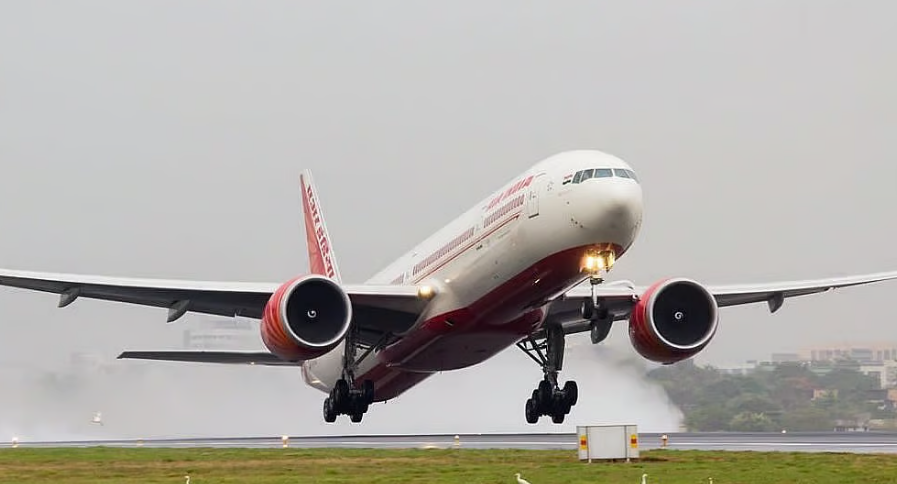
An Air India Boeing 777 aircraft had to turn back after a drop in oil pressure forced the pilots to turn off one of the jet’s engines, India’s aviation regulator said on Monday. The aircraft, which was headed to Mumbai, landed safely back in Delhi, and the Directorate General of Civil Aviation (DGCA) confirmed the incident will be investigated.
Modern aircraft are designed to safely fly and land on a single engine, if required. In this case, the B777-300ER’s design and the crew’s training allowed the plane to return without incident. Pilots observed low engine oil pressure on the aircraft’s right-hand engine during flaps retraction after take-off. The pressure quickly dropped to zero, prompting the crew to shut down the engine and return to Delhi in accordance with standard procedures, the DGCA said.
Air India issued a statement expressing regret for the disruption, saying, “Air India sincerely regrets inconvenience caused due to this unforeseen situation. The aircraft is undergoing the necessary checks.”
The aircraft involved is 15 years old and has previously flown international routes including Vienna, Vancouver, and Chicago, according to Flightradar24. Boeing did not immediately respond to requests for comment on the incident.
The event comes amid intensified scrutiny of Air India’s safety practices. Earlier this year, a Boeing Dreamliner crash on June 12 claimed 260 lives, raising concerns about operational standards. The DGCA has flagged multiple safety lapses at the airline, which was government-owned until its 2022 privatization. A separate Air India investigation into flights conducted without an airworthiness permit found “systemic failures,” with the airline acknowledging the need for stronger compliance, Reuters reported.
Industry experts emphasized that while engine oil pressure drops are serious, modern long-haul aircraft are equipped with multiple safety redundancies. These systems, along with rigorous pilot training, allow aircraft to operate safely even when an engine is shut down.
The DGCA will conduct a thorough review of the incident to ensure all procedures were correctly followed and to identify any potential maintenance or operational gaps. Meanwhile, Air India has begun additional checks across its fleet to prevent similar situations.
Passengers on Monday’s flight were safely evacuated, and no injuries were reported. Airline operations were briefly adjusted, with replacement aircraft deployed to maintain schedules.
The incident highlights the ongoing challenges in aviation safety oversight as Air India continues to expand international operations and modernize its fleet. Regulators and airline officials are expected to review procedures and strengthen compliance to maintain high safety standards and passenger confidence.