Oil prices fell on Monday after rising sharply last week, as hopes of diplomatic progress between the United States and Iran offered some relief to markets. However, continued attacks on Saudi Arabia’s energy infrastructure and concerns over shipping disruptions kept prices near six-month highs.
Brent crude futures fell $1.57, or 1.35%, to $115.15 a barrel by 1239 GMT. US West Texas Intermediate crude declined $2.11, or 2.04%, to $101.16 a barrel.
Both benchmarks had climbed on Friday, settling nearly $3 higher. Brent gained 6% over the week, while WTI rose 2.3%, reflecting persistent concerns about supply disruptions linked to the conflict involving Iran.
“With the jeopardy doubled by Houthi attacks into Saudi, any Brent price dips back to the lows of last week will find grateful buyers,” said John Evans, an analyst at PVM Oil Associates.
He added that the latest price correction had not reached levels likely to persuade bullish investors to abandon expectations of further gains.
Diplomatic efforts offered some hope of reducing regional tensions. Saudi Arabia, which was expected to join Turkey and Pakistan in talks with Iranian officials in Tehran, said opening channels for negotiations was important.
Qatari mediators also travelled to Tehran on Sunday as part of efforts to de-escalate the conflict in coordination with the United States, an official briefed on the matter said.
Despite these initiatives, attacks continued over the weekend. Yemen’s Houthi movement said it had targeted pumping stations along Saudi Arabia’s East-West crude oil pipeline and Riyadh airport. Saudi authorities said they had intercepted additional missiles and drones on Sunday.
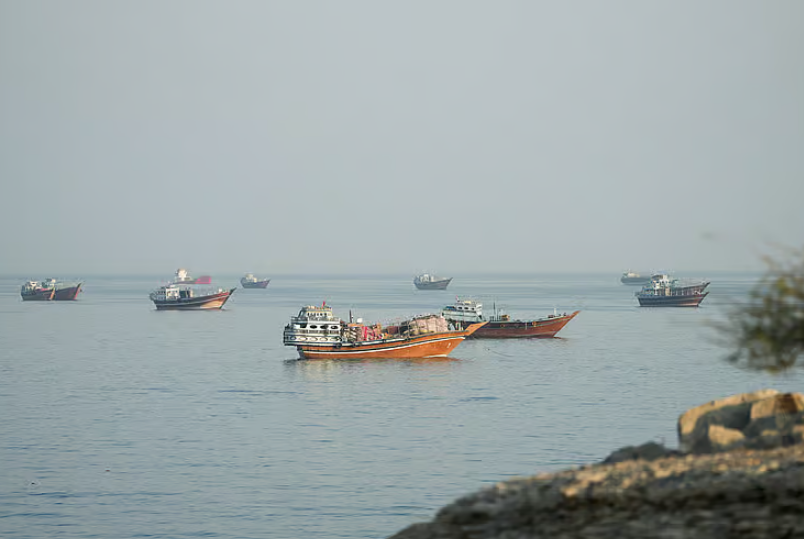
The conflict involving the United States, Israel and Iran, which began on February 28, has disrupted commercial shipping through the Strait of Hormuz and the Bab el-Mandeb Strait, two important routes for global trade and energy supplies.
October has been the worst month for attacks on commercial shipping in the Strait of Hormuz and nearby waterways, according to data compiled by the Washington Institute for Near East Policy, which has monitored maritime security incidents since 2017.
Meanwhile, Saudi Arabia and Singapore announced that state-owned oil producer Saudi Aramco would begin storing crude in Singapore during the second half of 2027. The arrangement is intended to make the company’s regional supply chain more resilient.
Fatih Birol, head of the International Energy Agency, also warned that energy markets faced a prolonged period of uncertainty. Speaking at an industry event in Singapore on Monday, he said he did not expect markets in 2027 to return to their pre-war conditions.
The combination of diplomatic efforts, continued attacks and shipping risks has left oil traders weighing hopes of de-escalation against the possibility of further supply disruptions.