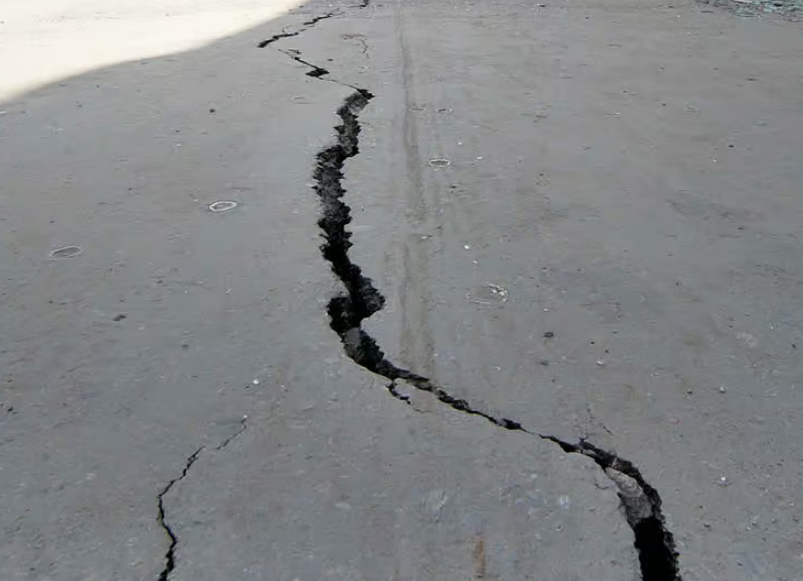
A magnitude 5.8 earthquake struck Balochistan, Pakistan, on Saturday, October 17, according to India’s National Centre for Seismology (NCS).
The earthquake occurred at a shallow depth of 15 kilometres, with its epicentre recorded at latitude 27.944 degrees north and longitude 66.532 degrees east, the agency said in a post on X.
The NCS reported that the tremor struck at 10:37 am Indian Standard Time, corresponding to 10:07 am in Pakistan. The agency identified Pakistan as the location of the earthquake but did not provide further details about its impact.
No information about casualties, damage to buildings or disruption to infrastructure was included in the initial report.
Earthquakes can cause varying levels of damage depending on their magnitude, depth, distance from populated areas and the strength of local buildings. Shallow earthquakes can produce stronger shaking near the epicentre than deeper tremors of similar magnitude, although the actual impact depends on local conditions.
The latest tremor follows another earthquake recorded in Pakistan in June. According to the NCS, a magnitude 5.3 earthquake struck on June 26 at a depth of 75 kilometres.
The agency reported that the earlier tremor occurred at latitude 30.273 degrees north and longitude 69.710 degrees east. It was recorded at 5:18:49 pm Indian Standard Time.
Pakistan is among the countries vulnerable to earthquakes because of its location near the boundary between the Indian and Eurasian tectonic plates. The movement and collision of these plates create geological stresses that can be released through seismic activity.
Balochistan is particularly exposed to earthquake risks because several active fault systems run through the province. Other vulnerable regions include Khyber Pakhtunkhwa and Gilgit-Baltistan, which are located near major geological fault lines.
Punjab and Sindh are also at risk of seismic activity, although the level of danger varies across different areas.
Earthquakes have historically affected several parts of Pakistan, highlighting the importance of monitoring seismic activity and improving preparedness. Authorities and emergency services generally assess the effects of significant tremors by checking for structural damage, injuries and disruptions to essential services.
The NCS report provided the magnitude, location coordinates and depth of Saturday’s earthquake. Further information would be needed to establish whether the tremor caused damage or was felt widely by residents in Balochistan and neighbouring areas.