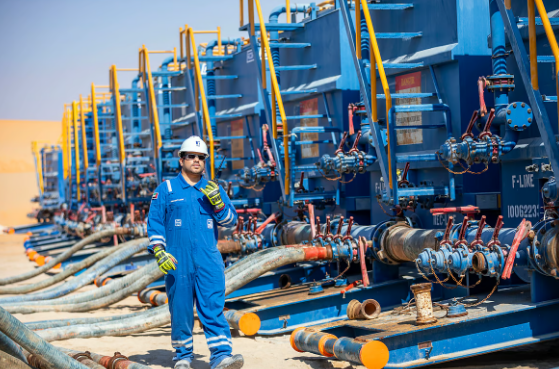
The UAE and Oman are expected to record stronger government finances this year despite disruption to energy exports caused by the US-Israel-Iran war, as higher oil prices have more than offset the impact of reduced export volumes, according to Capital Economics.
The outlook is less favourable for several other Gulf economies, with the impact of disruptions through the Strait of Hormuz weighing more heavily on their budget positions.
William Jackson, chief emerging markets economist at Capital Economics, said budget balances were expected to deteriorate compared with last year by about 2% of GDP in Saudi Arabia, around 5% in Kuwait and Bahrain, and as much as 10% in Qatar.
Oil prices were trading at about $100 a barrel on Monday, after Brent crude rose above $110 a barrel following the outbreak of the conflict. Prices reached about $114 a barrel on May 4 as supply concerns intensified after the closure of the Strait of Hormuz.
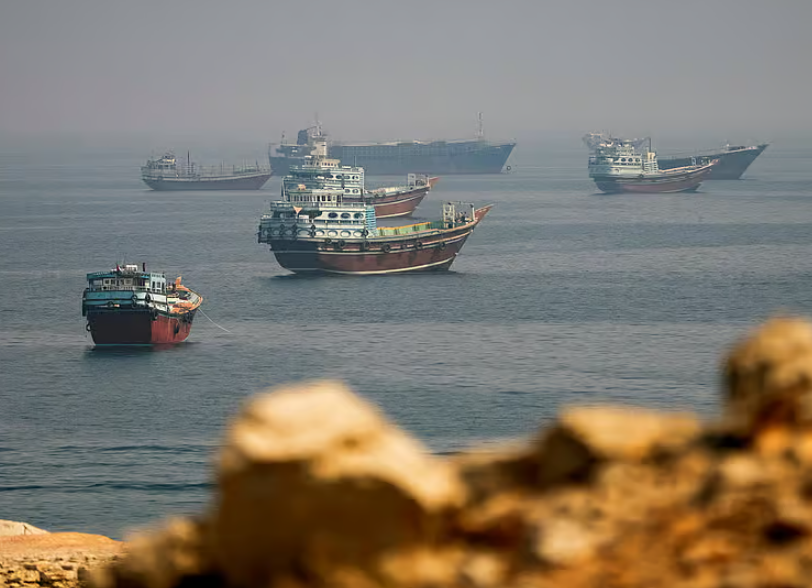
The strategic waterway between the Arabian Gulf and the Gulf of Oman remains severely disrupted, with attacks on vessels affecting the movement of oil tankers and other commercial ships. Several vessels have been damaged and casualties have been reported.
Capital Economics’ projections assume that disruption to energy exports will continue until early next year. Jackson said the estimates were subject to uncertainty because of limited fiscal data and a lack of transparency surrounding government spending plans across the region.
UAE and Oman benefit from higher prices
The effect on government finances varies according to each country’s ability to continue exporting hydrocarbons.
Capital Economics estimates that the UAE and Oman have benefited because higher energy prices have more than compensated for the limited disruption to their export volumes.
The UAE’s oil production increased after it left Opec earlier this year, giving the country greater scope to raise output and invest in its hydrocarbon sector. Higher production combined with elevated oil prices has supported government revenues.
The UAE also has substantial foreign exchange reserves and sovereign wealth funds, providing a financial buffer against regional and global market shocks.
Qatar, Kuwait and Bahrain face greater challenges because of their dependence on the Strait of Hormuz for oil and gas exports.
Qatar has taken the largest fiscal hit, according to Capital Economics, because of its reliance on liquefied natural gas exports. Unlike oil, LNG cannot be easily redirected through alternative pipelines. Qatar’s hydrocarbon revenues fell 97% year on year in the second quarter, according to budget data.
Kuwait and Qatar have large financial reserves that can help cover deficits. Kuwait has also approved legislation allowing the government to borrow from the Future Generations Fund.
Bahrain is more exposed because of its smaller savings and higher debt burden. Capital Economics said continued financial support from other Gulf states could be important in preventing pressure on its currency and sovereign finances.
Saudi Arabia has been partly protected by exports through the Red Sea, but its outlook depends on continued operation of the East-West pipeline. Capital Economics estimates that shutting the pipeline for the rest of the year would increase the deficit by about 1.5% of GDP.
The firm’s base case is for only a modest widening of Saudi Arabia’s deficit, although existing fiscal pressures could push public debt higher and increase the risk premium on Saudi assets.