Hamad Port handled more than 90,000 tonnes of grain between May and July this year, supporting Qatar’s food supply and helping maintain a steady flow of essential goods into the country.
The volume highlights the importance of the port to Qatar’s food security system, as the country continues to invest in infrastructure and supply networks designed to protect domestic supplies and support market stability.
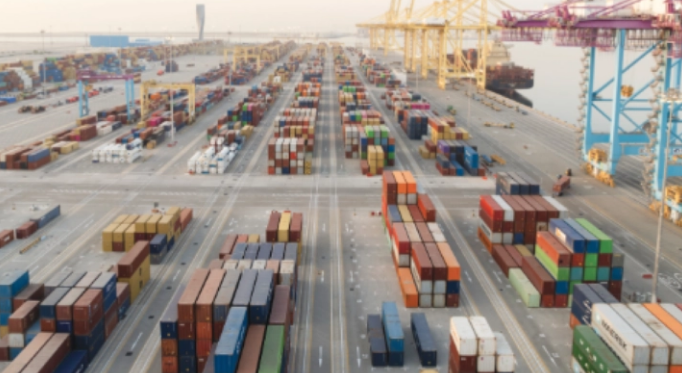
Hamad Port is a central part of Qatar’s maritime and logistics network. Its extensive shipping connections and cargo-handling facilities allow the country to receive essential imports while supporting the movement of goods linked to domestic economic activity and exports.
Captain Abdulaziz Nasser al-Yafei, executive vice-president of operations at Mwani Qatar, said Hamad Port serves as a major gateway for the country’s trade and supply chain operations. The port is connected to more than 100 maritime destinations worldwide, strengthening its role in food security and international trade.
The port has an annual design capacity of 7.5 million twenty-foot equivalent units, or TEUs, giving it the ability to handle rising trade volumes and future domestic demand.
Al-Yafei said the port’s performance is supported by an integrated 24-hour operating system that tracks vessel, container and truck movements. The system allows different authorities and operators to coordinate continuously while supporting preventive maintenance and emergency preparedness.
Close cooperation between Mwani Qatar and government and industry bodies also plays a key role in keeping cargo movements efficient. Partners include the Ministry of Transport, Ministry of Interior, Ministry of Commerce and Industry, General Authority of Customs and Qatar Navigation.
Hamad Port’s role extends beyond unloading and transporting cargo. The facility includes specialised infrastructure for storing, processing and packaging food products, making it an important part of Qatar’s wider food supply chain.
These facilities help manage goods from the point they arrive in the country through to their preparation for distribution in the domestic market. Mwani Qatar continues to develop the port’s capabilities as demand and international trade volumes change.
The operator is also working with global shipping lines and investing in infrastructure and operational systems to improve the movement of cargo through the facility.
Hamad Port began operations in 2016 and has since undergone several stages of development and expansion. The investment forms part of Qatar’s broader strategy to strengthen its ports and maritime transport sector.
With its growing capacity, international connections and specialised food facilities, Hamad Port remains a key component of Qatar’s efforts to maintain reliable supplies and support the wider economy.