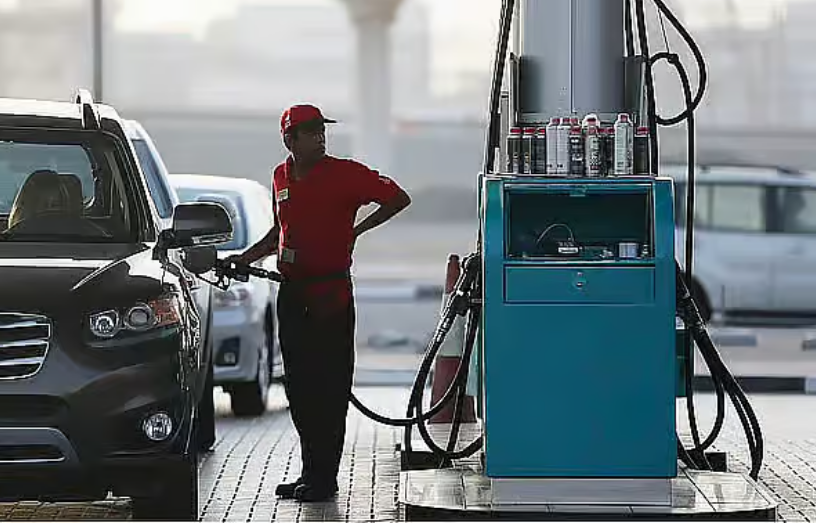
Motorists in the United Arab Emirates are awaiting the announcement of new petrol prices for May, with rates expected to rise slightly following sustained strength in global oil markets during April.
The UAE’s Fuel Price Committee is due to announce the revised prices on April 30. The monthly adjustment reflects movements in international crude oil markets, which remained elevated throughout much of April amid continued geopolitical tensions in the Middle East.
Oil prices traded largely in the high $90s per barrel during the month, with Brent crude at times climbing above $100. The rise was driven by the closure of the Strait of Hormuz and the ongoing regional conflict involving the United States, Israel and Iran. Although prices briefly eased after an extension of the ceasefire between Washington and Tehran, renewed military rhetoric between the two countries pushed crude higher once again.
The average closing price of Brent crude in April stood at $99.16 a barrel, compared with $96.96 in March. That increase has raised expectations that local fuel prices could edge higher for May, though the final decision will be made by the committee.
In April, UAE authorities increased petrol prices sharply after oil markets surged in March following the outbreak of hostilities in late February. Super 98 was set at Dh3.39 per litre, while Special 95 was priced at Dh3.28 and E-Plus at Dh3.20 per litre. The adjustment amounted to roughly Dh0.80 per litre, representing an increase of nearly one-third.
Energy analysts say the current market remains highly sensitive to developments in the Gulf, particularly the situation in the Strait of Hormuz, one of the world’s most important energy transit routes. The effective closure of the waterway since late February has removed an estimated 10 to 13 million barrels of oil per day from global supply, equivalent to around 12% of worldwide production.
This has created one of the most significant disruptions to global energy flows in decades, drawing comparisons with the oil crises of the 1970s. The impact has been intensified by the number of oil-producing nations affected by the regional instability.
Despite the anticipated increase, current prices remain well below the record highs seen in 2022 following Russia’s invasion of Ukraine. In July of that year, Super 98 reached Dh4.63 per litre, while Special 95 climbed to Dh4.52, marking the highest petrol prices ever recorded in the UAE.
Consumers and businesses alike will be watching closely when the new rates are released, as any increase would add to transportation and operating costs across the economy.